
The Imposter Syndrome Gender Gap: Why Women Are More Affected and How to Overcome It

As a woman writing this post, I want to start by acknowledging that imposter syndrome is a phenomenon that affects individuals of all genders. However, research has shown that women are much more likely to experience imposter syndrome than men.
That’s why I thought it was important to explore the factors contributing to this disparity and provide some strategies for combatting it.
Whether you identify as a woman, non-binary, or any other gender, the insights and tools presented here can help you overcome imposter syndrome and thrive in your personal and professional life. So let’s dive in!
What is Imposter Syndrome Anyway? 🤔
You know that feeling you get when you’re waiting for someone to call you out for being a fraud, even though you know you’re good at what you do?
That’s imposter syndrome, and it’s more common than you might think.
Imposter syndrome is a psychological phenomenon where you doubt your abilities and feel like you don’t belong, despite all the evidence to the contrary. It’s like an annoying little voice in your head telling you you’re not good enough, or that you don’t deserve to be where you are or have what you have.
Here are some common signs and symptoms of imposter syndrome:
These feelings of self-doubt can manifest in various aspects of life, including school, work, and relationships, and can have a significant impact on our mental health and well-being.
The good news is that imposter syndrome is not a true reflection of our actual abilities or worth, and there are effective strategies you can use to overcome it – which I’ll explore more a little later.

The Imposter Syndrome Gender Gap
So why are women more likely to experience imposter syndrome than men? Unfortunately, it’s not one simple answer.
There are a number of factors that contribute to the gender gap in imposter syndrome.
Here are some of the most commonly cited reasons:
Societal and Cultural Expectations: Women often face added pressure from society to be perfect, which can lead to feelings of inadequacy and self-doubt when they inevitably fall short of these unrealistic expectations.
Gender Stereotypes and Biases: Women are often portrayed as weaker, less competent, and less capable than men in the media and popular culture. These stereotypes can create a sort of “self-fulfilling prophecy,” where women internalize these beliefs and feel like they don’t belong in traditionally male-dominated fields.
Workplace Dynamics: Women often face unique challenges in the workplace, such as the gender pay gap, bias, sexual harassment, and discrimination. These issues can create feelings of insecurity and powerlessness that can lead to imposter syndrome. Additionally, women may have less access to opportunities for career advancement or professional development, which can further fuel their doubts and insecurities.
NOTE 📝
Women of color, LGBTQIA+ women, and women with disabilities often experience unique challenges and barriers related to imposter syndrome.
For example, women of color may face both gender and racial bias, which often serves to further compound and complicate our feelings of self-doubt and inadequacy.
Despite these challenges, there are strategies that we can use to combat imposter syndrome and build confidence in ourselves.
Strategies for Overcoming Imposter Syndrome
Imposter syndrome can be a challenging and persistent experience, but the most important thing to remember is that you are capable and deserving of success, regardless of what society or anyone else says.

Here are some tips for overcoming imposter syndrome:
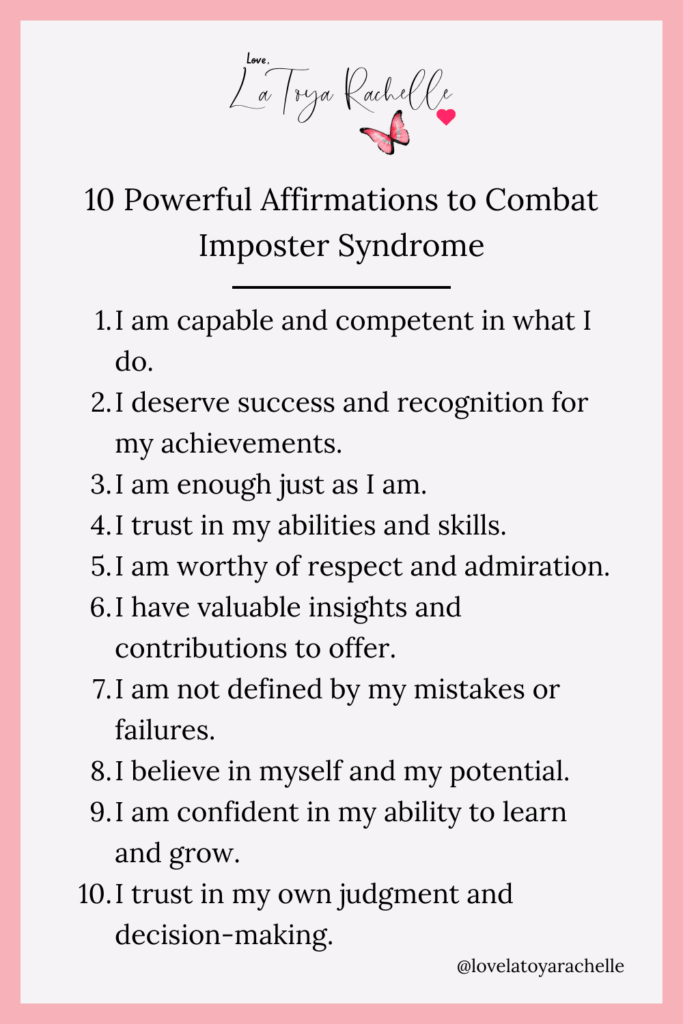
Affirmations for Imposter Syndrome
⬇️ CLICK FOR FREE DOWNLOAD ⬇️
Related: Breaking the Cycle of Negative Self-Talk
Strategies for Building a Supportive Environment to Overcome Imposter Syndrome
As someone who has personally struggled with imposter syndrome, I know how challenging it can be to overcome those feelings of self-doubt.
And I know from personal experience that having a strong support system can be very helpful in overcoming imposter syndrome and building your self-confidence.
How Allies Can Help Women Overcome Imposter Syndrome
Allies can play a critical role in creating a supportive environment for individuals with imposter syndrome. Here are some ways that they can help:
Workplace Strategies for Supporting Individuals with Imposter Syndrome
The workplace can be an especially challenging environment for women with imposter syndrome, but there are strategies that employers can implement to support them.
One key strategy is to encourage open communication. Those in power should strive to create a safe and supportive environment where individuals can openly discuss their feelings of self-doubt and then help them feel validated and understood.
Providing mentorship or coaching programs can also be an effective strategy. These programs can help individuals build skills and confidence, and provide guidance and support as they navigate their careers. Celebrating achievements and successes, both big and small, can also help individuals build confidence and self-esteem.
Another important strategy is to normalize failure. Encouraging a culture where failure is seen as a natural part of the learning process, and where individuals are encouraged to learn from their mistakes, can help reduce the fear of failure that often contributes to imposter syndrome in the first place.
By implementing these strategies, employers can create a supportive environment that helps women with imposter syndrome feel valued and supported, and one that also encourages them to reach their full potential.
The Importance of Normalizing Conversations Around Imposter Syndrome and Mental Health
Creating a supportive environment also involves normalizing conversations around imposter syndrome and mental health. Educating yourself and others about imposter syndrome and mental health is the first step in raising awareness and reducing the stigma.
Fostering a culture of empathy is another important strategy. Encouraging a culture where individuals can openly discuss their struggles with mental health and receive support and empathy from their peers can help reduce the feelings of isolation and shame that often come with imposter syndrome.
Providing resources is also crucial. Employers can provide access to mental health resources, such as therapy or support groups, to help individuals get the help that they need. By making mental health resources available, employers foster goodwill and demonstrate their commitment to supporting the well-being of their employees.

You Are Capable: Embracing Your Confidence and Overcoming Imposter Syndrome For Good
Throughout this post, I’ve discussed how imposter syndrome can affect individuals of all genders, but particularly imposter syndrome in women. This is because historically, women have been socialized to doubt themselves and their abilities.
Still, my goal in writing this is to show that, despite the gender gap in imposter syndrome, there are steps that we can all can take to overcome it.
I also want to remind you that confidence is not something that you’re born with – it’s something that can be cultivated over time. It starts with self-love, believing in yourself, and trusting your instincts.
As the great Maya Angelou once said…
“When you know you are of worth — not asking it but knowing it — you walk into a room with a particular power.”
Maya Angelou
Don’t be afraid to push yourself out of your comfort zone, seek feedback, and learn from your mistakes.
It’s also important to remember that imposter syndrome is a common experience and you are not alone in feeling this way.
We must work together to create a culture of empathy and support, where individuals can openly discuss their struggles with imposter syndrome and receive the resources they need to thrive. Creating a more inclusive and supportive society starts with each one of us.
Remember, you are capable, worthy, and deserving of success.
Thank you so much for trusting me on your journey towards overcoming imposter syndrome and embracing your confidence.
You’ve got this! 💪🏾
Until next time,
xoxo