Does Pilates Build Muscle? Here’s What You Need to Know

If you’re a woman wondering whether Pilates can help you build muscle, the answer is a resounding yes!
This popular form of exercise, often associated with graceful movements and sculpted physiques, may not incorporate traditional weightlifting moves, but it’s still a highly effective method for building lean and toned muscles.
Disclaimer:
The information provided on this page is for informational and entertainment purposes only and does not constitute professional advice. Please consult a qualified expert or professional before making any decisions based on this content. Your use of this information is at your own risk.
What is Pilates?
Please note that some of the following links are affiliate links, meaning I may earn a small commission if you make a purchase. This is at no additional cost to you.
Pilates, named after its creator Joseph Pilates, is a low-impact workout that focuses on strengthening and toning your entire body, with a particular emphasis on your core muscles. It involves a series of controlled movements that engage your muscles while also promoting flexibility, better balance, and overall mind-body awareness.
At its core, Pilates is a form of resistance training that emphasizes controlled movements to engage muscles effectively. Unlike traditional weight training, which often involves heavy lifting and specific muscle isolation, Pilates targets multiple muscle groups simultaneously, promoting a more balanced and functional physique.
Central to Pilates is the concept of core stability – the strengthening of deep abdominal muscles to support the spine and maintain proper posture. Through a series of exercises, pilates practitioners engage their core while also working on other muscle groups, leading to improved strength, flexibility, and overall fitness level.
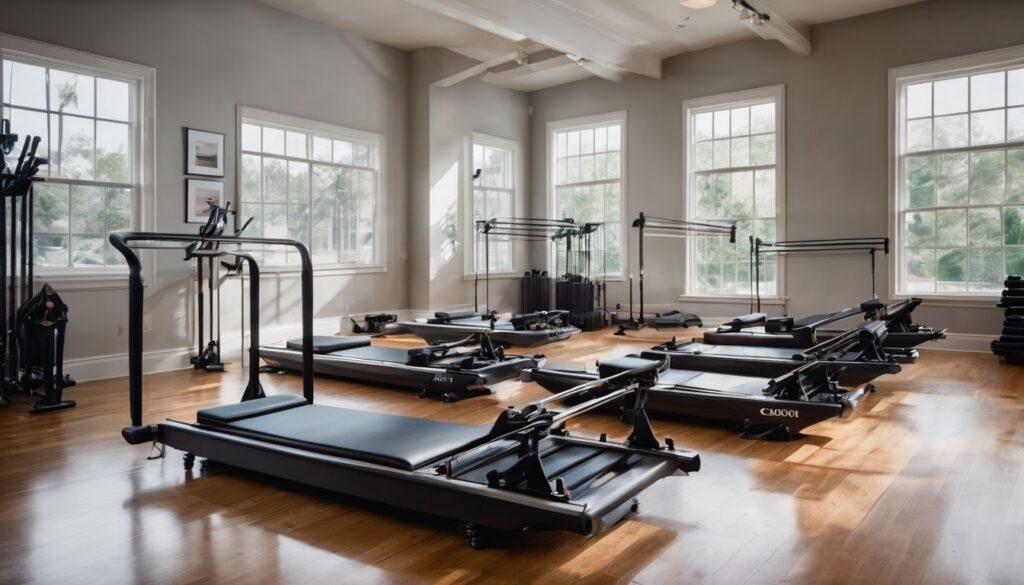
Pilates offers various types of exercises, ranging from mat-based routines to equipment-assisted workouts utilizing machines like the Pilates reformer and the Cadillac. Regardless of the method, each session focuses on enhancing body awareness, refining movement patterns, and fostering mind-body connection.
Pilates can be tailored to suit different fitness levels and goals. Its adaptability makes it suitable for individuals recovering from injuries, as well as those seeking to complement their existing strength training regimen.
Related Content: Grab Your Free 75 Soft Challenge Tracker Printable Here
How Does Pilates Build Muscle?
Pilates is particularly beneficial for women as it uses resistance training in the form of your own body weight, springs, and other equipment to challenge your muscles and improve their strength.
Unlike traditional heavy weights used in weightlifting, Pilates caters to women’s fitness needs by emphasizing slow and controlled movements that challenge muscles throughout the entire range of motion. Engaging your entire body is a key element of Pilates exercises.
This slow and controlled approach promotes stronger and more defined muscles without adding bulk.
Pilates also incorporates deep breathing techniques, which help to oxygenate the muscles and increase endurance.
Additionally, by focusing on core stability, Pilates helps to improve overall muscle balance and reduces the risk of injuries caused by muscular imbalances.
The result is a strong, evenly toned body that is less prone to strains and sprains.

Pilates vs. Traditional Strength Training
Pilates and traditional strength training serve different purposes, though both can contribute to muscle development.
Here’s how they compare:
| Pilates | Traditional Strength Training |
|---|---|
| Utilizes bodyweight and resistance bands for strength. | Often involves heavy weights and machines. |
| Focuses on core stability and body alignment. | Targets specific muscle groups for hypertrophy. |
| Emphasizes control and precision of movement. | Centers on lifting maximum weights for gains. |
| Encourages improved posture and flexibility. | May not emphasize flexibility and posture. |
| Good for muscle endurance and toning. | Geared towards building muscle size and strength. |
| Involves a holistic approach, engaging the entire body. | Focuses on isolated exercises for muscle growth. |
It should be noted that Pilates can complement traditional strength training by enhancing movement efficiency and reducing injury risk.
Next, let’s jump into the benefits Pilates offers specifically for muscle building.

Benefits of Pilates for Muscle Building
Pilates offers improved core strength, improved posture and balance, increased flexibility, and a strong mind-body connection. These benefits make Pilates a great addition to any muscle-building routine.
Improved Core Strength
Pilates helps to enhance core strength by targeting the deep stabilizing muscles of the abdomen, lower back, and pelvis. Engaging in Pilates exercises like the Hundred, Criss-Cross, and Teaser can effectively activate and strengthen these muscles.
Building a strong core foundation also decreases the risk of back pain.
Incorporating Pilates into your fitness routine not only tones your abdominal muscles but also supports a stronger spine and better body alignment. This is especially beneficial for women looking to maintain good posture as they age or those recovering from childbirth.
Improved Posture and Balance
Pilates contributes significantly to improved posture. By engaging the core muscles, Pilates helps in aligning the spine and pelvis, which promotes a more upright and balanced stance.
The focus on proper body alignment during Pilates exercises also aids in strengthening the muscles that support good posture.
By strengthening the core muscles that support balance, you can also improve your overall stability and coordination. This is especially beneficial for older women who may experience a decline in balance as they age.
Additionally, Pilates workouts emphasize mindful movements that encourage awareness of body positioning and how it relates to overall posture.
Furthermore, Pilates targets postural muscles such as the deep abdominal and back muscles to provide stability for the spine and improve overall body alignment.
As these key muscle groups are strengthened through regular practice, they contribute to better posture not only during exercise but also in everyday activities.

Increased Flexibility
Improved flexibility is another key benefit of Pilates.
Dynamic movements performed during Pilates exercises help to increase flexibility, allowing muscles to stretch and lengthen.
This results in improved muscle mobility and range of motion, which can decrease stiffness and prevent injury.
Moreover, the focus on proper alignment and controlled movements in Pilates helps to reduce muscle tension, which can also contribute to increased flexibility.
Women who practice Pilates regularly may notice an improved range of motion in their joints and muscles, making daily activities such as bending, reaching, and twisting easier and more comfortable. This is especially beneficial for women with sedentary jobs or those who spend long periods of time sitting, as it helps to counteract the negative effects of prolonged sitting on the body.
Mind-Body Connection
Pilates promotes the mind-body connection by emphasizing precise and controlled movements, breathing techniques, and mental focus.
This holistic approach helps to improve overall body awareness, reduce stress, and enhance relaxation during workouts.
By engaging both the mind and body, Pilates encourages better concentration and mindfulness in everyday activities, leading to a more balanced lifestyle.
Furthermore, cultivating this mind-body connection through Pilates can be particularly beneficial for women looking to build muscle as it enables them to develop a deeper understanding of their body’s capabilities while maximizing the effectiveness of their workouts.
Enhancing this connection may lead women to experience improved muscle engagement and achieve better results from their Pilates sessions.

You might also like: Get the Body You’ve Always Wanted: 10 Surprising Benefits of Pilates for Women
How to Incorporate Pilates into Your Muscle-Building Routine
Start with a solid foundation and then gradually combine Pilates with traditional strength training. Focus on quality over quantity and progress over time. Challenge yourself but don’t underestimate the importance of rest and recovery.
Start With a Solid Foundation
Before diving into a Pilates routine to build muscle, it’s important to establish a strong foundation.
This involves learning the basic principles of Pilates, such as proper alignment, breathing techniques, and engaging the core muscles.
Doing so will not only prevent injury but also ensure that your muscles are properly engaged during each exercise and set the stage for more advanced movements.
Consider working with an experienced Pilates instructor who can guide you through the foundational exercises and ensure that you are using the correct form so that you can master the proper techniques before incorporating Pilates more formally into your muscle-building routine.
Combine Pilates With Traditional Strength Training
Once you have a solid understanding of the foundational principles, you can start incorporating Pilates into your regular strength training routine.
This can be done by substituting certain traditional exercises with their Pilates counterparts.
For example, instead of doing traditional crunches, try performing Pilates “criss-cross” exercises which target the abdominal muscles more effectively while also engaging the entire core.
Or incorporate a few minutes of Pilates mat work into your usual warm-up routine to activate and engage your muscles before hitting the weights.
By incorporating Pilates into your routine, you can improve overall muscle balance and strengthen stabilizer muscles that are often overlooked in regular weightlifting exercises.
This combination can enhance your overall muscular strength and help prevent injury by addressing muscle imbalances, especially if you focus on proper form during both types of exercise.
Focus on Quality Over Quantity
When adding Pilates to your muscle-building routine, it’s also important to remember that quality is more important than quantity.
Pilates exercises are all about precision and control, so it’s crucial to focus on using proper form and engaging the correct muscles, rather than trying to do as many repetitions as possible.
This approach will not only maximize the effectiveness of your Pilates workouts but also help prevent injury and ensure that you are targeting the intended muscle groups.
So take your time and focus on executing each movement with precision and control for better results.
Keep Challenging Yourself
As with any exercise routine, it’s important to continue challenging yourself in order to see progress and avoid plateauing.
Pilates offers a variety of modifications and variations for each exercise, making it easy to adjust the level of difficulty as your strength and endurance improves.
Don’t be afraid to try more advanced Pilates exercises or increase the intensity by adding props such as resistance bands or light weights.
This constant challenge will not only keep your workouts interesting, but also help you continue to build strength and improve muscle balance.
Don’t Forget to Rest
While it’s important to stay consistent and challenge yourself, it’s equally crucial to give your body time to rest and recover.
Overtraining can lead to injury and hinder progress, so make sure to schedule in rest days for both your body and mind.
Incorporating restorative practices such as foam rolling or stretching into your routine can also help prevent muscle soreness and promote recovery.
Remember, rest is just as important as exercise in achieving overall fitness and wellness. So listen to your body and don’t be afraid to take a break when needed.

Recommended: Get Your Free 75 Medium Challenge Printable Tracker Here
Individual Factors to Consider
Consider your fitness level and specific goals when incorporating Pilates into your routine. Also, think about how to fit it into a busy schedule and the importance of proper nutrition for muscle building.
Fitness Level
Your fitness level plays a crucial role in how Pilates can help build muscle. If you’re new to exercise, Pilates serves as an effective introduction to resistance training as it focuses on using your body weight for strength.
For those with moderate fitness levels looking to enhance muscle strength and muscle tone, Pilates can still be a valuable addition to your routine. It offers low-impact exercises that are gentle on the joints, making it suitable for individuals with varying levels of physical capabilities.
If you’re already quite fit and active, incorporating Pilates into your workout regimen can further challenge your muscles in different ways than traditional weight training does.
Additionally, if you’re aiming for increased flexibility and balance while maintaining or building lean mass, combining high-intensity workouts with regular Pilates sessions might be a great way to achieve these goals effectively.
Specific Goals
When considering incorporating Pilates into your workout routine, it is essential to define your specific goals. Whether you aim to increase core strength, improve flexibility, enhance overall muscle tone, or focus on a particular muscle group, having clear objectives will guide the type of Pilates exercises and routines that are best suited for you.
How to Incorporate Pilates Into a Busy Schedule
When considering incorporating Pilates into a busy schedule, it’s essential to prioritize consistency over duration. Even squeezing in short sessions throughout the week can yield significant benefits.
The beauty of Pilates is its versatility and adaptability to fit into even the busiest schedule. You can do Pilates at home, with minimal equipment, making it easy to squeeze in a workout during your lunch break or before work.
Try performing core-strengthening moves while watching TV or doing leg circles and leg lifts while cooking dinner to maximize time efficiency without compromising effectiveness.
Additionally, many gyms and fitness studios offer Pilates classes at different times throughout the day, making it easier to find a time that works for you.
The Importance of Nutrition
The importance of good nutrition cannot be overstated, as a balanced diet provides the necessary fuel for muscle recovery and growth.
Protein is essential for repairing and building muscle tissue, while carbohydrates supply energy for intense workouts.
Additionally, adequate intake of vitamins and minerals supports overall health and fitness goals.
Hydration also plays a crucial role in muscle function and recovery. Drinking enough water before, during, and after your pilates sessions helps to maintain electrolyte balance and prevent dehydration.

You may also enjoy: Get Your Free 75 Hard Challenge Printable Tracker Here
Conclusion
So, to circle back to the burning question: “Does Pilates build muscle?”
The answer is Yes!
But Pilates is not your typical weightlifting routine. It’s so much more!
It’s a perfect choice for women looking to sculpt strong, lean muscles without the bulk often associated with traditional weight lifting.
So why not give it a try? I promise your body will thank you. 🧘🏽♀️
Until next time,
xoxo

FAQs
Does Pilates help with building muscle?
Absolutely! Pilates is a type of exercise that targets and strengthens specific muscles, like your internal and external obliques, to result in increased core stability and a long, lean physique.
Is Pilates considered a low-impact exercise?
Pilates is definitely a low-impact workout. It is suitable for people who want to avoid joint pain or those who have lower back pain but still want to build dynamic balance and strength. Still, it’s always wise to consult your primary care physician before starting any exercise program to ensure it’s suitable for your individual health needs.
Can older adults build muscle by doing Pilates?
Yes, older adults often find pilates classes to be excellent workouts for building muscles and gently incorporating physical activity while also improving bone density and overall quality of life.
How does Reformer Pilates differ from Mat Pilates?
Reformer pilates uses specialized equipment to add resistance, making it ideal for weight loss and targeting specific muscles such as the glute muscles, transverse abdominis, and adductor muscles within the inner thighs; whereas mat pilates requires just a yoga mat and focuses on utilizing bodyweight through various poses.
Will my heart rate go up during Pilates sessions like it does with aerobic exercise?
While not similar to high-energy aerobic exercises, some forms of pilates exercises do increase heart rate by challenging you with movements that require control and precision.
Can Pilates help manage symptoms of Polycystic Ovary Syndrome (PCOS)?
Yes, Pilates can be a valuable tool for managing symptoms of PCOS. The gentle yet effective nature of Pilates exercises can assist in weight management, which is often a concern for women with PCOS like myself. Additionally, Pilates focuses on core strength and stability, which can help alleviate the pelvic pain and discomfort often associated with PCOS. Moreover, Pilates incorporates deep breathing and relaxation techniques, which can help reduce cortisol levels—a stress hormone that can exacerbate PCOS symptoms.
How often should I do Pilates for optimal muscle building?
The frequency of your Pilates sessions will depend on your fitness goals and personal schedule. However, to see significant results in muscle building, it is recommended to do Pilates at least 2-3 times a week. This will allow your muscles enough time to rest and recover between sessions while still maintaining consistency in your practice. It’s important to listen to your body and not push yourself too hard, as this can lead to injury and hinder progress. Remember that quality over quantity is key.