
12 Women’s Ministry Ideas That Build Real Sisterhood

A lot of women’s ministry gatherings look good on the surface, but still feel a little disconnected. You can show up, chat, and leave without really getting to know anyone.
Real sisterhood takes more than being in the same room. It comes from creating space where women can open up and feel supported.
These ideas are designed to help women connect on a deeper level and build relationships that last.

1. Go Beyond Small Talk
Surface-level conversation only goes so far. It’s easy to talk about schedules, work, or what’s been going on during the week, but those conversations rarely lead to real connection.
Bring in a few thoughtful questions that invite something a little deeper. It doesn’t have to feel heavy or overly personal, just enough to move past the usual back-and-forth. Questions about faith, challenges, growth, or even what’s been weighing on someone lately can open the door.
Give the conversation room to unfold naturally. Not everyone will jump in right away, and that’s fine. As the women in your group start to feel more comfortable, the conversation will begin to open up on its own.

2. Start a Prayer Partner System
Pairing women up gives connection a place to grow outside of group settings. Instead of only seeing each other at church, the women in your group will have someone checking in on them during the week, praying for them, and staying connected on a more personal level.
Partners can text, call, or touch base however they prefer. The goal is consistency, not long conversations or added pressure.
Switching partners every so often can also help everyone get to know more people in the group while still building those one-on-one connections that often lead to stronger relationships.

3. Host a Testimony Night
There’s something powerful about hearing someone’s story in their own words. A testimony night allows women to see each other beyond surface-level conversations and understand what others have walked through.
Invite a few women to share ahead of time so they have space to think through what they want to say. But don’t worry about the need for things to be perfectly polished or structured. Honesty matters more than presentation here.
As women begin to share their stories, it will open the door for others to relate, reflect, or even share parts of their own experiences. That’s where connection starts to deepen between your group and trust begins to build.

4. Plan Small Group Gatherings
With large groups, it’s easy for people to sit back and not say much. However, breaking your women’s group into smaller circles changes the dynamic and gives everyone a better chance to be part of the conversation.
It just feels more natural to speak up, share thoughts, and respond to others in a smaller setting. A smaller setting also makes it easier to notice who hasn’t had a chance to speak yet without putting anyone on the spot.
Quieter women often feel more at ease in these settings, which leads to more balanced conversations and stronger connections across the group.

5. Check In Between Meetings
Connection shouldn’t stop once your women’s ministry event ends. A quick text, a short call, or a message during the week can make a bigger impact than expected.
And it doesn’t have to be long or detailed either. A simple “thinking of you” or “how are you doing?” lets someone know they haven’t been forgotten.
Those small touchpoints help relationships grow and remind women they’re supported, not just during church events, but throughout the week.
6. Celebrate Life Moments Together
Not everything has to center around a formal event. Taking time to recognize what’s happening in each other’s lives goes a long way in building real connection.
Birthdays, new jobs, answered prayers, even small personal wins, all of it matters. A quick shoutout during a gathering, a card passed around, or a few kind words can make someone feel seen.
When women feel noticed and appreciated, it strengthens that sense of belonging and reminds them they’re part of something that cares about them.

7. Serve Others as a Group
Pick something real and local. Help a church member who’s been sick, bring meals to a family going through a hard time, or maybe clean out a storage room that’s been ignored for months.
Working alongside each other gives people something to do with their hands, which makes conversation feel less forced. You end up talking, laughing, and getting to know each other without trying so hard.
Serving others also shifts the focus outward. Instead of everything centering on the group itself, you’re showing up for someone else together. That tends to bring people closer faster than another sit-down gathering.

8. Host a “Come As You Are” Gathering
Let everyone know ahead of time this isn’t one of those events where they need to get dressed up or bring anything. No coordinating outfits, sign-up sheets, or pressure to contribute.
That alone can make a difference. Women show up more relaxed when they’re not thinking about what they should have done before walking in.
It tends to feel more like sitting in someone’s living room than attending an event, which makes it easier for people to settle in and actually connect.

9. Create a Safe, Judgment-Free Environment
Pay attention to how the group responds when someone shares something personal. If people jump in with advice, interrupt, or try to fix it, that can shut things down fast.
It’s better to listen and let her finish her thoughts without turning it into a discussion about what she should do. Not every situation needs a solution in that moment. It also helps to be mindful of side comments, facial expressions, and reactions.
The tone of the group builds over time. When women feel like they can speak without being corrected or talked over, they’re more likely to open up again.
Conversation Starters That Actually Get Women Talking
- What’s something God has been teaching you lately?
- What’s been weighing on you this week?
- What’s one prayer you’ve been holding onto?
- When have you felt most encouraged recently?
- What’s something you’re trusting God with right now?
- What’s a challenge you’ve been working through?
- What’s one thing you wish more people understood about you?
- What helps you feel supported?
10. Encourage Mentorship Across Ages
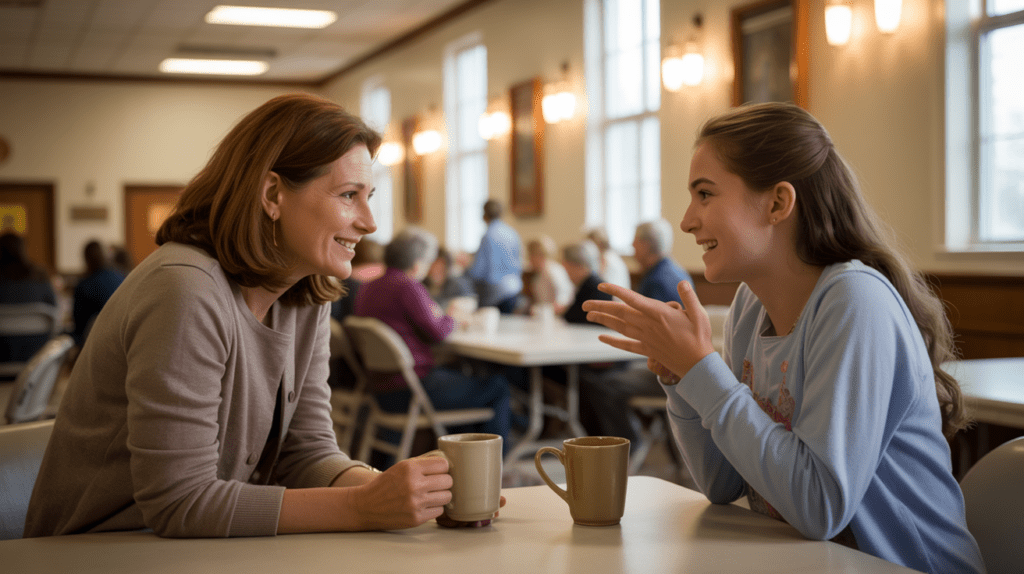
Put younger and older women in the same space often enough, and relationships start to naturally form. It doesn’t need to be labeled or structured as “mentorship” from the start.
Sometimes it looks like sitting next to each other during a study, helping with the same project, or just ending up in the same conversation more than once. Over time, those interactions turn into something more meaningful.
There’s a lot of value in having women at different stages of life connecting like this. Advice gets shared naturally, encouragement flows both directions, and the group becomes more connected as a whole.
11. Share Responsibilities
When one person handles everything, everyone else falls into the habit of just showing up. Eventually, that creates distance instead of connection.
Pull others in where it makes sense. Invite different women to host, lead a discussion, bring a devotional, or help organize something. Just giving someone a role, even a small one, helps them feel more connected to the group.
It also takes pressure off one person and makes the group feel more like a shared effort instead of something run by just a few people.

12. Have Fun Together
Do something that doesn’t require anyone to share anything personal or “go deep.” A game, a trivia night, cards, even something a little silly.
When there’s something to focus on, people relax without thinking about it. You get conversation, laughter, and interaction without having to pull it out of anyone.
Some of the strongest connections start in those settings because no one feels put on the spot.

Final Thoughts
You don’t need a packed calendar or perfectly planned events to build real connection. Most of it comes down to how women are treated when they show up and what happens after they leave.
When people feel comfortable enough to talk, be honest, and come back again, that’s when something real starts to form. It won’t look the same in every group, and it doesn’t need to.
Focus on creating a space where women actually get to know each other. The rest tends to fall into place from there.
Until next time,